Tag: workers compensation

  • ‘Twas the Night before Mediation

    (c) Teddy Snyder SnyderMediations.com

    ‘Twas the night before mediation
    And all through the firm
    Not a creature was stirring,
    Not even a worm

    But then one lawyer
    Asleep on a couch
    Shot up, hit his head
    And said with an “Ouch”

    Oh my, I’ve got
    That mediation tomorrow
    I didn’t do a brief
    Much, much to my sorrow

    Then what to his exhausted eyes should appear
    But Mediator Snyder with news of good cheer

    You don’t need it fancy
    You don’t need it long
    Just give me some clues
    So the time’s not spent wrong

    Just send me an “e”
    It’s all confidential
    Tell me the issues
    What’s the dollar potential?

    With that she was gone
    The lawyer banged out a brief
    He’d be ready tomorrow
    Oh what a relief.

    This holiday season
    When your time seems too short
    Turn to mediation
    And stay out of court.

    Happy Holidays!


  • Tactics vs. Strategy

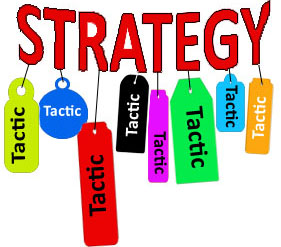
    Tactics are steps you take to win short term goals on the way to achieving your strategic objective. Sometimes tactical skirmishes distract workers compensation professionals from pursuit of their strategic goal. On the other hand, you can’t reach your strategic objective without well-thought-out tactics.

    The Disputed Doctor’s Deposition
    Take the case where an attorney insisted that the deposition of the doctor who provided the most recent report had to precede settlement discussions. The problem was that by the time that could happen, all the permanent disability would be paid out. After providing for future medical expense, that would leave no cash for the applicant or the attorney fees, jeopardizing the chance of a future Compromise & Release. When I pointed this out, the parties realized that a tactical victory could prevent achieving the strategic goal. The case C&R’d.

    The Tale of the Two Interpreters
    I arrived at a recent mediation to find the attorneys at loggerheads because both had ordered an interpreter. Both interpreters were court-certified. I convinced one of the attorneys that agreeing to dismiss the interpreter that attorney’s office had ordered would create a negotiating advantage. In the give-and-take of negotiation, opposing counsel might well feel beholden to make the next concession. Conceding the interpreter battle demonstrated the attorney’s reasonableness and set the stage for a productive mediation. The case C&R’d.

    A litigation plan should be more than a checklist. Every tactic should further the effort to achieve the strategic goal.

  • Understanding Insurance Reserves


    Understanding insurance reserves can help settle a claim. A reserve is a pot of money set aside to pay for a specific expense category. Typically, there are separate pots for indemnity, medical and med-legal expenses.

    Sometimes a negotiator finds that a claim can be closed for an amount more than remains in the indemnity and medical reserves. However, part of the settlement can be classified as a med-legal expense. By spending the money from the med-legal reserve, settlement can be achieved while staying within current reserve limits.

  • Ghosts, Goblins and Mediators

    Halloween is just around the corner, a time when people love to be scared. It’s fun, because everyone knows there’s really nothing scary at all.

    Mediation isn’t scary. Yet some claim and legal professionals fear it.

    Fear of losing control
    Adjusters and attorneys know their jobs. They may bristle at the idea of someone else getting involved in the settlement process. Yet, they don’t hesitate to call in other experts.

    Claim and legal professionals retain control in mediation. Only the parties can choose an outcome. The mediator cannot order anyone to take any action. What the mediator can do is help parties define issues, resolve differences, and see new routes to settlement.

    Fear of looking bad
    Some professionals worry that calling in a mediator makes them look like they couldn’t do their job. On the contrary, professionals who use every tool in their arsenal look smart. Referring a claim for mediation can short-cut litigation, saving time and money. This makes you look like someone who knows how to get things done.

    What are you scared of?
    You don’t need a costume, and you don’t need a candy bucket to get started.  Treat yourself to mediation to move that difficult case forward.  Mediation can benefit all parties, and that’s no Halloween trick.

  • How Medical Identity Theft Affects Claim Resolution

    Medical identity theft occurs when a thief obtains treatment using the victim’s social security number or health insurance identification number. Authorities also report arrests of care providers who have stolen medical identities and submitted bills for treatment they never performed.  Cyber-attacks on medical data have produced a market for this kind of information.
    Treatment 
    A theft victim’s biggest risk is improper medical treatment due to provider reliance on an incorrect medical history. The victim could end up with a transfusion of the wrong blood type, an incorrect prescription, or ineffective treatment tailored to the wrong facts. If inappropriate treatment of an industrial injury results in the need for further medical care, the additional care will also be an industrial treatment expense.

    Payment for Treatment 
    Injured workers may not know their medical identity was stolen until their treatment request is denied. When medical records show non-industrial causation of the subject condition, a carrier may deny treatment. Records might also show a prior industrial claim for the condition now under review. If the injured worker denies such prior treatment, medical identity theft could be the cause of the discrepancy.

    When an injured worker claims medical identity theft is the reason for a record of prior treatment, record reviewers should pay close attention to notes of contact information for the patient and family members, height, weight, age, and other telltale features which could confirm or weaken a claim of medical identity theft.

    Employers facing a claim of medical identity theft will have to use a rule of reason and tread carefully. As with other denials, once the injured worker starts treating non-industrially, the employer loses control of the treatment and may end up paying much more than if the condition had been treated within the Medical Provider Network.

    medical-identity-thief
    Apportionment
    When the injured worker sustained a prior disabling injury, the percentage of disability payable on the current claim will be apportioned. But what if that prior injury was to someone else using the current claimant’s identity? Parties will need evidence about the prior injury and treatment including the injured worker’s actual location and activities on the relevant dates.

    Liens
    Given the market penetration of some medical providers (such as Express Scripts), a claim could trigger issues relating to bills incurred for stolen treatment. CMS might respond to a submission for MSA approval with a reimbursement request for treatment provided to the thief.

    Separating Medical Record Histories
    The identity theft victim will bear the burden of cleaning up the medical record history, including notification to care providers, credit agencies and possibly law enforcement officials. This task is another source of stress at what is already a stressful time for an injured worker.

    The employer needs a complete medical history relating to the industrial injury and usually obtains the relevant records by subpoena. Once the theft is discovered, new privacy issues may arise in obtaining those records.

    What If The Injured Worker Is The Thief?
    Sometimes an undocumented worker avoids detection until there is an industrial injury. Medical treatment planning can disclose a medical history at odds with the known facts of the injured worker’s life. In California, the injured worker will be entitled to treatment of the industrial injury. As with the identity theft victim, disentangling the two medical histories can complicate the treatment plan.

  • Get “In Pro Per” Claims Off The Books

    You know the claims I’m talking about: the really old claims where the Injured Worker is representing himself/herself. Let’s call them “in pro per”s.  Active in pro pers file one court paper after another, causing the insurer or self-insured employer to fund what seems like a never-ending stream of money to send a representative to the Board. The in pro per’s papers may not state a recognizable claim. Pressed for time, the Information and Assistance officer may give the in pro per short shrift.  Defense attorneys with varying degrees of patience usually do, too.

    But what if what the parties really need is a sort of an interpreter, a mediator.

    Mediating an in pro per’s claim demonstrates respect for the in pro per.  The feeling of lack of respect and inability to get heard is often what drives the in pro per to keep summoning the employer to court.

    “Why would I waste time and money on a worthless claim?” you may ask. Because you’re spending time and money now, and mediation is a way to end that endless cycle.

    Sometimes the in pro per has a bona fide complaint, but without professional assistance has not been able to communicate it. The neutral mediator is often able to re-state the concern in a way the parties can address and put past them. The mediator can help each party see the other side’s point of view.
  • HOW POLITICS DRIVES UP THE COST OF YOUR MSA

    For President George W. Bush and Congress to get Medicare Part D drug coverage passed in 2003, they had to make significant concessions to big business, including the drug industry. One of the law’s provisions forbids the government from setting rules for negotiating better drug prices. The “noninterference” section says:

    In order to promote competition . . . the Secretary [of Health and Human Services]:
    (1) may not interfere with the negotiations between drug manufacturers and pharmacies and PDP [Prescription Drug Plan] sponsors; and
    (2) may not require a particular formulary or institute a price structure for the reimbursement of covered part D drugs.
    42 USC 1395w-111(i)

    The result according to a new policy brief from the Carlton University School of Public Policy and Administration is that Medicare Part D plans pay on average 73% more than Medicaid and 80% more than the Veterans Health Administration for brand-name drugs. If Part D plans could negotiate drug costs the way Medicaid and the VA do, savings could reach $16 billion a year.

    The study shows that the average per capita expenditure by Americans for pharmaceuticals is more than double the average of 32 other industrialized nations. Contrary to their publicity, American drug companies do not devote the wealth gained from Part D on new research initiatives. Half of new medical research initiatives come from non-profit entities such as universities. Rather, drug companies have spent their millions in recent years on increased lobbying. If drugs costs decreased, Medicare beneficiaries could expect Part D premiums to also decrease.

    Although private insurers pay Part D medical expenses, workers compensation professionals are painfully aware that anticipated Part D-covered expenses must be included in a Medicare Set-Aside. The increased use and rising cost of pharmaceuticals has torpedoed many a proposed workers compensation buy-out. If the purpose of an MSA is to protect Medicare, why are Part D expenses which are paid by private insurers included in the allocation anyway?

    Casualty insurance companies and the American Association for Justice are big political players. With the 2016 election cycle coming up, now would seem to be the time for their lobbyists to twist some arms to modify the noninterference provision for the benefit of all Americans.

  • If you like it, then you have to put a ring on it.

    If you like it, then you have to put a ring on it. In the mediation context, that means documenting your agreement.


    It’s a good idea to bring a partially completed Compromise & Release form to the mediation.  The document can be completed and signed on the spot. This is efficient and forestalls buyer’s/seller’s remorse (subject to WCAB approval). This would be true for a Stipulation as well.

    Sometimes the parties’ agreement is more limited. Mediations can address narrow issues, such as whether a body part will be considered part of the industrial injury or what was the Average Weekly Wage.  Document that agreement with a Memorandum of Understanding. The mediator can help you make sure to cover all the issues.

  • Why Mediations Are Like Diamonds

    Anyone shopping for a diamond quickly learns diamonds have four characteristics known as the four C’s:
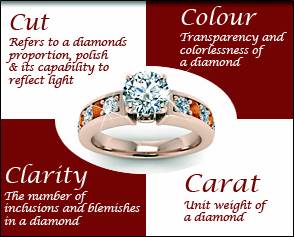
    Like a diamond, mediation is incredibly valuable and has its own 4 C’s:
    Confidentiality
    Candor
    Creativity
    Collaboration

    Confidentiality
    Confidentiality is what makes mediation work. Anything said in mediation cannot later be used in a court. If the parties do not settle, the court will never hear that the defense made a settlement offer of a certain amount or that Applicant was willing to accept certain settlement terms. Similarly, documents created solely for the mediation cannot be used in court.

    Typically, the mediator will ask all participants (not just parties) to sign a confidentiality agreement at the beginning of the mediation. But confidentiality doesn’t start or end on mediation day. Any communications prepatory to the mediation or following up the mediation are also confidential.

    Candor
    Confidentiality promotes candor. Because disclosures in mediation cannot be used against a party, parties can be more forthright in discussing the weaknesses of their case. This usually happens in caucus, when parties are with the mediator, and the other side is in another room. Parties must give permission for the mediator to convey information to the other side. Candid discussions in mediation are more likely to lead to settlement compared to the posturing that often happens in litigation.

    Creativity
    When parties get down to the real work of negotiation, discussions with the mediator can lead to new ideas about how to resolve the issues. This can include non-monetary benefits or utilizing third-party resources, such as public health benefits. Often these are options the parties had not previously considered.

    Collaboration
    Settlements result when both sides buy in to new ways of looking at the issues. Parties are at their most collaborative and creativity can really explode when parties re-convene for a brainstorming session. That’s the time to come up with a range of possible solutions and hammer out the best one.