Tag: mediation

  • The One Word to Keep Negotiation Going

    How do you react when your negotiating opponent says something completely outlandish? Some negotiators walk out. Some blow up, screaming invective. Some stoop to insult. In short, they do everything but negotiate.

    Keep negotiating
    You can’t reach a negotiated settlement if you’re not negotiating. Sometimes you must react to the nonsense you have just been offered. But how to respond when you are actually biting your tongue?

    Wow.

    There it is. The single word that keeps you non-committal.

    The Perfect Rejoinder
    The injured person has spent 20 minutes weepily telling a tale of woe. You may believe the person has problems, but they are unrelated to the cause of action under discussion. Your respectful response: wow.Opposing counsel has just literally laid on the table proof that your side has concealed evidence for more than a year and lied about it in discovery responses. You know you need to round up your team and figure out what has been going on. Your dispassionate response: wow.

    Defendant insists that their personnel were nowhere near the alleged incident at the critical time. You have just uncovered video footage that shows this is false, but you are not quite ready to disclose this. Your calm response: wow.

    Wow Works Wonders
    A startling, emotional, or angry statement could tempt you to respond in kind. But ratcheting up the emotion index can interfere with the parties’ ability to keep things in perspective. While others around you are heating up, staying cool as you observe the dynamic keeps you in control. Wow.


  • 3 Tips for a Successful Mediation

    Assessing your case from your side’s point of view is critical. But it won’t get you far if you don’t pay attention to your opponent’s needs as well.

    Here are three tips to help you move from conflict to resolution.

    1. Spend time sizing up the case from your opponent’s point of view. They are most likely to see things your way if you can pitch your case to match their needs.
    2. Mediation may be the only opportunity to direct information to the client without the attorney filter. Present information in joint session or through the mediator to appeal to the client.
    3. Assess your litigation budget—and your opponent’s. Look beyond the dollars. Before you head to mediation, draft a plan for discussing the time and energy that will be required as well as the emotional investment.

    Every negotiator would love to get everything they want. That’s not likely to happen. Try to fashion a compromise that appeals to the parties’ needs.

  • 3 Logic Skills to Favorably Settle Your Case

    Most of the cases I mediate are fact-dependent. The law is settled; it is up to the parties to correctly apply the law to these facts. Yet, lawyers sometimes show up with little understanding of what the relevant law is. When the applicability of statutes and regulations is cloudy, case law provides interpretation. Reconsider how these three logic skills apply to that case you know just needs to be settled before parties spend any more time or money.

    Analogize /Extrapolate/Distinguish
    Every individual is different; hence, every case is unique in some ways. Legal analysis involves  researching legal precedents to see the similarities to and differences from the facts of this dispute.

    If case law favors your position, fashion your arguments to show why the precedent is an analogy for the facts of the present case. Instead of understanding this basic legal skill, I see advocates argue against their client’s interest that there are differences.

    To create an analogy, one must extrapolate, i.e., show how the court deciding this case should apply the reasoning of the previously decided case to different facts to rule in favor of the client. This argument requires thoughtful preparation and creativity.

    An attorney who argues that a precedent is so different that it has little bearing on the present dispute is distinguishing that precedent. This is an analysis of degrees of difference.

    If you dig deep enough, you can probably find cases that could suggest opposite results for your case. Don’t ignore the unfavorable ones. The skillful practitioner will show why the favorable cases are analogous to the one being negotiated and the unfavorable ones should be distinguished.

    Remember, you can direct your mediation statement solely to the mediator, and it will remain confidential. Whether in a court memo, a mediation statement, or a demand letter, a reasoned presentation is more persuasive than a bombastic declaration.
  • Confidentiality Agreements, Zoom, and Procrastination

    Confidentiality is a hallmark of the mediation process. Information introduced exclusively at the mediation, whether oral or tangible, cannot be introduced in any other civil forum. The Evidence Code spells this out for civil cases; the Government Code applies in administrative cases. Guaranteed confidentiality promotes frankness, especially when people are in caucus with the mediator without the presence of other parties, which in turn facilitates settlement.
    Get It in Writing
    Each person who is present at the mediation, regardless of their role, needs to sign a joint confidentiality agreement. This can be executed in counterparts.

    Though the statutes spell out the confidentiality provisions, executing an agreement assures that each person is aware of the provisions and has consciously committed to abide by them. Many mediation services specifically require execution of a prescribed mediation confidentiality form. The U.S. District Court Approved Mediators Panel for the Central District and the Center for Conflict Resolution which provides mediators for certain state Superior courts have such forms. I am a member of both these panels.

    When a mediation is set up, participants will usually receive a packet, including a copy of a confidentiality agreement with instructions about returning it. Participants can expect to receive the document weeks or months in advance.

    Though there may be plenty of time to obtain parties’ signatures, attorneys and claim professionals seem to lack the organization necessary to return the agreement in a timely fashion. The demands of the most pressing matters can turn the most efficient of us into procrastinators.

    What Is the Most Productive Use of Mediation Time?
    Before the COVID pandemic, mediations were almost always held face-to-face. Confidentiality agreements were circulated in the opening joint session. The need for remote, virtual mediation via platforms like Zoom changed this dynamic.Getting signed confidentiality agreements to the mediator is now more unwieldy. Typically, agreements are downloaded, then electronically signed; alternatively, participants can print the agreement, physically sign it, then scan, save and transmit the document. The hiccup occurs when parties do not transmit the signed document before the mediation.

    The mediation will not start without submission of the confidentiality agreement. If it has not been submitted, time is spent on the administrative task of gathering the documents, rather than in negotiation.

    If parties are benefiting from three free hours of a mediator’s time, is this the best use of that expertise? If this is a paid mediation, do you really want to pay for the mediator’s time spent on this mundane task rather than working on settling the case?

    Shun Procrastination

    To avoid wasting everyone’s time at the start of a mediation, start working on getting a fully executed confidentiality agreement to the mediator as soon as you have the form. Calendar dates to follow up with the necessary signers just as you would calendar other litigation deadlines. Not only will your mediation proceed more smoothly from the first moment, you will impress the mediator with your dedication to the settlement process.
  • Focus on the Future

    A 2013 market study indicated that 21% of the U.S. population read science fiction. Science fiction films are even more popular.

    If we’re so fascinated with speculation about the future, why do we look to the past instead of the future when we negotiate?

    Instead of planning for a life without conflict, negotiating parties tend to dwell on issues of the past. For example, fixating on how much money has already been spent (called “sunk costs”) instead of on how much will be saved by settling now, can get in the way of an objective case evaluation.

    Litigation creates anxiety. We know that parties are relieved once their disputes are resolved. Redirecting negotiators’ attention to a future without the ongoing investment of time, money and stress can spur settlement. That is true for how your team discusses their position and also how you present your position to your negotiating opponent.

    A future without conflict is a better future. Mediation can help you get there. And that’s not science fiction.

  • Playing Devil’s Advocate

    The litigation section of the California Lawyers Association recently published this bon mot:

    “Mediators are expected to play the role of ‘Devil’s advocate,’ questioning the strength or viability of the various legal arguments being asserted by parties and/or their counsel. In this context, mediators may dive deeply into the law applicable to the underlying dispute (and defenses). The parties may provide sophisticated though conflicting analysis of that law in the mediation briefing and during the session.”

    Maybe parties don’t want me to be the devil, but I was actually asked by one attorney to “knock heads together.”

    If you are serious about settling your case, please contact me. We’ll come up with some ways to make it happen– perhaps devilish, perhaps angelic .

  • What is the Truth?

    Many lawyers and claims professionals say that the litigation process is a search for truth. They will swear allegiance to a jury’s ability to ferret out the truth from conflicting evidence. And yet, more than 90% of all cases settle. The truth can be more slippery than you think.

    Individual Lens
    Each of us receives data through our own lens based on our experience and attitudes. Why We’re Wrong About Nearly Everything: A Theory of Human Understanding by Bobby Duffy provides multiple examples of people ignoring the facts in front of them. For example, a study reported in Behavioural Public Policy saw subjects looking at the exact same data about the effectiveness of gun control, but interpreting them to favor their own pre-conceived views.

    Lawyers know it is impossible to ferret out every possible micro-experience in a potential juror’s background. They depend on the collective knowledge of the group to arrive at a favorable result.

    Socrates Said There is No Absolute Truth
    All of us filter the information we receive through our own mental and sometimes physical viewpoint. Several witnesses to an event may tell different stories about what occurred. What is more probably true than not? Are you sure?

    This conundrum really breaks down when fact-finders are asked to decide between expert opinions. I often tell mediating parties about a case I was involved in which ended with a large verdict in favor of the plaintiff. The pivotal issue was causation. Did they really think the defendant’s act caused plaintiff’s damages? It didn’t matter. The jurors’ collective response was summarized by one representative statement: “She was just so sick.”

    The Search for Truth is an Obstacle to Settlement
    More often than not, parties never get to a judgment which establishes the “truth.” They do settle, but not before spending time and money beyond a point when they knew enough to settle.

    Mediation helps parties see beyond a search for an absolute truth to evaluate all the relevant factors and settle sooner.
  • New Restrictions on Confidentiality in Settlement Agreements

    Effective January 1, 2022, amended California Code of Civil Procedure §1001 expands restrictions on confidentiality clauses in settlement agreements.

    Previous law barred such clauses in agreements settling filed civil or administrative actions alleging sexual assault or sexual harassment. Only the identity of the claimant and the amount of the settlement could be protected.

    The new provisions expand the prohibition to include

    1) acts of workplace harassment or discrimination not based on sex, and

    2) acts of harassment or discrimination not based on sex by the owner of a housing accommodation.

  • 3 REASONS HONEST WITNESSES TELL FALSE STORIES

    Many cases turn on the recollection of “percipient” or “occurrence” witnesses. These are people who used their senses to see or hear relevant evidence. Less commonly, they might have smelled, touched,   or tasted something. Percipient witnesses contrast with expert witnesses, who are usually engaged in anticipation of or during litigation. Expert witnesses rely on evidence which has been submitted to them so they can render an opinion based on their education and experience. They need to record what they relied on, but don’t have a recollection of the events of the case as they occurred.
    Honesty Isn’t the Issue
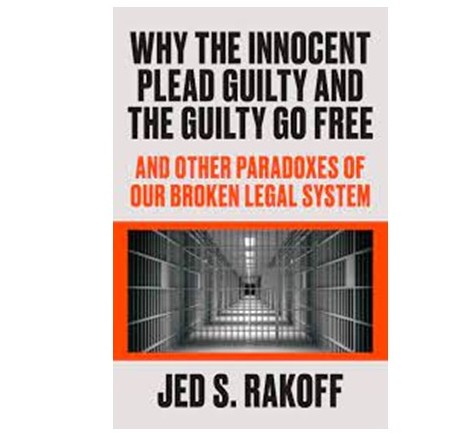
    In his 2021 book Why The Innocent Plead Guilty And The Guilty Go Free/ And Other Paradoxes Of Our Broken Legal System, federal district judge Jed S. Rakoff explains why eyewitness testimony in criminal cases is unreliable. Those same reasons apply to percipient witnesses in civil cases.

    1)The witness’s own level of stress at the time of the incident affects and can impair their recollection.

    2)The inherent human tendency over time is to add embellishments to enhance the completeness of the recollection or simply to accord with preexisting biases.

    3) There is a wide range among people’s ability to retrieve memories of events that lasted only a short time.

    It’s An Old Story
    In the celebrated 1950 film Rashomon, multiple percipient witnesses tell wildly different versions of the same event. Today, the well-known unreliability of eyewitnesses is sometimes called the Rashomon Effect.

    What to Do?
    A witness may really believe the story that witness is telling—and that story could hurt your case a lot. It’s hard to predict how the trier of fact will view conflicting evidence. Witness unreliability is one reason why going to trial is such a gamble. Recognizing this paradigm should prompt you to choose mediation  to settle sooner rather than later.