Category: _Regular Post

Category to place the post in the last group of the blog page and not in the featured posts sections.

  • CMS Gets Tough on Unapproved MSAs– Until They Don’t

    In January, 2022, CMS created an uproar when it published Version 3.5 of its Workers Compensation Medicare Set-Aside Reference Guide stating that it would essentially ignore “non-submit” or “evidence-based” Medicare Set-Aside allocations:

    Unless an MSA is submitted and approved, CMS cannot be certain that Medicare’s interests are adequately protected. Therefore, CMS will treat any non-CMS-approved product as a potential attempt to improperly shift financial burden by denying payment for medical services related to the WC injuries or illness until the claimant demonstrates complete exhaustion of the entire settlement amount, less fees and costs, rather than a CMS-approved WCMSA amount.

    CMS approval of an MSA was never required. Ten years ago, the LexisNexis Legal Newsroom for Workers Compensation Law published my article “Four Reasons To Avoid The CMS Approval Process For MSAs.” You can find an abstract of that article on this blog.

    Then, the MSA industry created products known as “non-submit” or “evidence-based” MSAs. Since approval has never been required of any MSA, the purpose of this new version seemed to be to low-ball the MSA. CMS took notice.

    If your MSA was priced correctly, they now say, it will be adequate to cover the injured worker’s medical expenses, and this will never be an issue. One problem with this approach is that injured workers do routinely exhaust their approved MSAs. Since MSA allocations do not account for inflation, they are likely to be depleted early; the younger the injured worker, the more likely the fund will be depleted.

    CMS also took the position that if the MSA was paid via a structured settlement, Medicare wouldn’t pay a dime until every structured payment had been made. If the structure was set to pay for the life of the injured worker, that would never happen.

    And Then They Backed Down

    On March 15, 2022, CMS revised the relevant section to say:

    CMS may at its sole discretion deny payment for medical services related to the WC injuries or illness, requiring attestation of appropriate exhaustion equal to the total settlement … less procurement costs and paid conditional payments, before CMS will resume primary payment obligation for settled injuries or illnesses. . .

    Administratively, CMS can more easily simply ignore unapproved MSA allocations rather than spend time reviewing them in order to exercise discretion. Line by line review takes time.

    CMS has sent a message that it intends to crack down on settlements designed to avoid CMS review. We may see sterner pronouncements in future revisions.

    How to Proceed

    Think twice before choosing to forego the approval process when it is available. Don’t rely on an MSA allocation designed to short-change CMS.

    Re-think your settlement agreements. If approval was not available or not pursued, consider including a what-if clause., This would provide that if CMS denies payment of a claim-related Medicare-eligible expense, the employer will provide counsel to defend the MSA allocation. In the short term, the employer would be responsible for the medical expense of the injured worker’s immediate needs, perhaps subject to a ceiling.

    One can imagine that disputes could arise about what constitutes a claim-related Medicare-eligible short-term need. Include an agreement for alternative dispute resolution. But, holy-moly, nobody wants to keep litigating long after everyone thought the claim was fully and finally settled.

    These dilemmas will probably force people to seek approval whenever it is available.

    Which is just what the folks at CMS want.

  • Playing Devil’s Advocate

    The litigation section of the California Lawyers Association recently published this bon mot:

    “Mediators are expected to play the role of ‘Devil’s advocate,’ questioning the strength or viability of the various legal arguments being asserted by parties and/or their counsel. In this context, mediators may dive deeply into the law applicable to the underlying dispute (and defenses). The parties may provide sophisticated though conflicting analysis of that law in the mediation briefing and during the session.”

    Maybe parties don’t want me to be the devil, but I was actually asked by one attorney to “knock heads together.”

    If you are serious about settling your case, please contact me. We’ll come up with some ways to make it happen– perhaps devilish, perhaps angelic .

  • THE ADJUSTERS’ AND LAWYERS’ REMOTE MEDIATION SECRET

    COVID-19 changed our lives in oh-so-many ways. Courthouses and government buildings shut, and we were forced to suddenly embrace virtual platforms like Zoom, GoToMeeting, WebEx and Microsoft Teams.

    Now that restrictions are lifting, many of us don’t want to go back to our pre-pandemic business model. We want to keep working from home, at least some of the time.

    And we want mediations to stay remote.

    Efficient and Effective
    Remote mediation relieved attorneys and claim professionals from coping with stressful and unproductive traffic jams. Decision-makers could call in from anywhere, avoiding the obstacle of the real decision-maker not being present at the mediation. Participants with a history of vitriolic interaction particularly liked the absence of close personal contact.The Secret Benefit of Remote Mediation
    Shhh! What lawyers and adjusters really want to keep secret is that they like not sitting with their clients in caucus throughout the mediation.

    In traditional mediation, the parties usually break into separate caucus rooms. The mediator acts as a shuttle diplomat, walking between the rooms to confidentially discuss offers and demands and to convey information in a way to facilitate settlement. When the mediator is not in the caucus room, lawyers, adjusters and clients can review what has happened and plan their next move.

    And then they sit.

    They make small talk. The lawyers, especially, try to charm their clients in a way likely to encourage further referrals.

    Sometimes, contrary to instruction, clients bring children to the mediation. Lawyers and adjusters find themselves literally and figuratively baby-sitting their clients during periods which can stretch on for what feels like forever while the mediator talks to the people in the other room.

    In contrast, in remote mediation, the mediator electronically moves participants who physically remain in their own offices or homes into virtual, separate caucus rooms. When not talking with the mediator or their own team, participants are free to engage in other activities so long as they remain fully available for the mediation. Suddenly, adjusters and lawyers found that they could attend to other (perhaps billable) work. Clients can work or attend to other obligations.

    Will We Go Back?
    Some negotiators maintain that being able to physically look one’s opponent in the eye and assess body language are critical. Research shows that we are all actually poor in correctly evaluating these supposed indicators.

    Most mediation veterans want to keep things virtual and productive.

  • Gifts for Every Lawyer

    Know anyone who would benefit from better legal marketing with less stress? A lot of lawyers have great ideas about how to market their practice, but then they get busy and never follow through. The Lawyers Marketing Journal is a guided journal published by AttorneyAtWork.com that helps the user organize and actualize ideas while staying centered in both the personal and professional life.
    Lawyers have turned to  the American Bar Association publication Women Rainmakers’ Best Marketing Tips for legal marketing advice for more than twenty years. The updated and expanded fourth edition came out in 2021.
    Hurry! Supply is limited.
  • New Law Opens Narrow Window For Increased Survivor Damages

    We are all aware that COVID restrictions disrupted the ability of civil litigants to get a speedy trial. In some cases, the plaintiff died waiting for trial. Though the action survived, upon the death of the plaintiff, non-economic damages were no longer recoverable. The California legislature addressed this issue by amending California Code of Civil Procedure (CCP) 337.34 to add:

    . . . in an action or proceeding by a decedent’s personal representative or successor in interest on the decedent’s cause of action, the damages recoverable may include damages for pain, suffering, or disfigurement if the action or proceeding was granted a preference pursuant to Section 36 before January 1, 2022, or was filed on or after January 1, 2022, and before January 1, 2026.

    Preference Cases
    CCP 36 allows three groups of litigants with a substantial interest in the case to move the court to try the case within 120 days:
    — A party over 70 years whose health is such that a preference is necessary to prevent prejudicing the party’s interest in the litigation
    — A party under 14 years of age
    — A party in any other case who requests the court to exercise discretion to serve the interests of justiceParties or their representatives who had successfully moved for a preference before 2022 can seek damages for a decedent’s pain, suffering, or disfigurement. Conversely, parties in those pending cases who did not qualify or did not move for a preference will be denied the ability to recover non-economic damages.

    For example, if a 69-year-old plaintiff who had filed a case in 2021 dies in 2022 before getting to trial, the representative cannot seek general damages on behalf of the decedent, even if they moved for preference in 2022.

    Cases Filed 2022-2025
    The new law is temporary. It defines a four-year window. Notably, the law also requires a plaintiff who recovers damages pursuant to the new law between January 1, 2022 and July 31, 2024 to submit a report to the Judicial Council detailing the particulars of the judgment or court-approved settlement. In turn, the Judicial Council will report the results to the legislature on or before January 2025. The legislature can then consider whether to make these provisions permanent.

    Settlement Considerations
    The value of cases which qualify for this expanded damages rule has increased. In some cases, the added value will dwarf the economic damages. Parties must consider the added exposure to defendants in evaluating cases for settlement. Additionally, in cases where settlement does not require court approval, there may be some value to creating settlements which will not be reported to the Judicial Council.

  • What is the Truth?

    Many lawyers and claims professionals say that the litigation process is a search for truth. They will swear allegiance to a jury’s ability to ferret out the truth from conflicting evidence. And yet, more than 90% of all cases settle. The truth can be more slippery than you think.

    Individual Lens
    Each of us receives data through our own lens based on our experience and attitudes. Why We’re Wrong About Nearly Everything: A Theory of Human Understanding by Bobby Duffy provides multiple examples of people ignoring the facts in front of them. For example, a study reported in Behavioural Public Policy saw subjects looking at the exact same data about the effectiveness of gun control, but interpreting them to favor their own pre-conceived views.

    Lawyers know it is impossible to ferret out every possible micro-experience in a potential juror’s background. They depend on the collective knowledge of the group to arrive at a favorable result.

    Socrates Said There is No Absolute Truth
    All of us filter the information we receive through our own mental and sometimes physical viewpoint. Several witnesses to an event may tell different stories about what occurred. What is more probably true than not? Are you sure?

    This conundrum really breaks down when fact-finders are asked to decide between expert opinions. I often tell mediating parties about a case I was involved in which ended with a large verdict in favor of the plaintiff. The pivotal issue was causation. Did they really think the defendant’s act caused plaintiff’s damages? It didn’t matter. The jurors’ collective response was summarized by one representative statement: “She was just so sick.”

    The Search for Truth is an Obstacle to Settlement
    More often than not, parties never get to a judgment which establishes the “truth.” They do settle, but not before spending time and money beyond a point when they knew enough to settle.

    Mediation helps parties see beyond a search for an absolute truth to evaluate all the relevant factors and settle sooner.
  • New Restrictions on Confidentiality in Settlement Agreements

    Effective January 1, 2022, amended California Code of Civil Procedure §1001 expands restrictions on confidentiality clauses in settlement agreements.

    Previous law barred such clauses in agreements settling filed civil or administrative actions alleging sexual assault or sexual harassment. Only the identity of the claimant and the amount of the settlement could be protected.

    The new provisions expand the prohibition to include

    1) acts of workplace harassment or discrimination not based on sex, and

    2) acts of harassment or discrimination not based on sex by the owner of a housing accommodation.

  • 3 REASONS HONEST WITNESSES TELL FALSE STORIES

    Many cases turn on the recollection of “percipient” or “occurrence” witnesses. These are people who used their senses to see or hear relevant evidence. Less commonly, they might have smelled, touched,   or tasted something. Percipient witnesses contrast with expert witnesses, who are usually engaged in anticipation of or during litigation. Expert witnesses rely on evidence which has been submitted to them so they can render an opinion based on their education and experience. They need to record what they relied on, but don’t have a recollection of the events of the case as they occurred.
    Honesty Isn’t the Issue
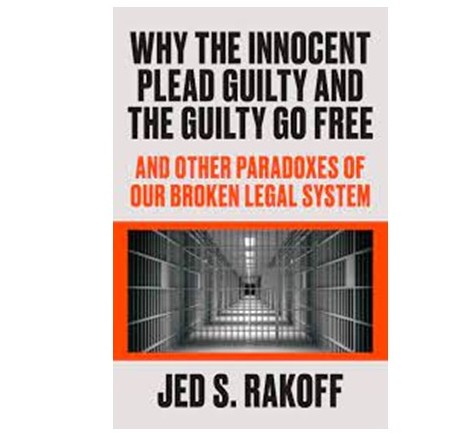
    In his 2021 book Why The Innocent Plead Guilty And The Guilty Go Free/ And Other Paradoxes Of Our Broken Legal System, federal district judge Jed S. Rakoff explains why eyewitness testimony in criminal cases is unreliable. Those same reasons apply to percipient witnesses in civil cases.

    1)The witness’s own level of stress at the time of the incident affects and can impair their recollection.

    2)The inherent human tendency over time is to add embellishments to enhance the completeness of the recollection or simply to accord with preexisting biases.

    3) There is a wide range among people’s ability to retrieve memories of events that lasted only a short time.

    It’s An Old Story
    In the celebrated 1950 film Rashomon, multiple percipient witnesses tell wildly different versions of the same event. Today, the well-known unreliability of eyewitnesses is sometimes called the Rashomon Effect.

    What to Do?
    A witness may really believe the story that witness is telling—and that story could hurt your case a lot. It’s hard to predict how the trier of fact will view conflicting evidence. Witness unreliability is one reason why going to trial is such a gamble. Recognizing this paradigm should prompt you to choose mediation  to settle sooner rather than later.

  • 50 SHADES OF NEGOTIATION GREY

    No, this post doesn’t qualify as erotica. It’s about the ability to see nuance. Most cases are not black-and-white, no-doubt-about-it, situations. Rather, there are shades of grey. If this were an open-and-shut case, chances are that claim would not be in dispute.
    It’s Part of Empathy
    Being able to see all the facets of an issue enhances your ability to negotiate a settlement. You can best meet your opponent’s arguments if you take the time to put yourself in that person’s shoes long enough to figure out what those arguments are. Then you can best meet them.

    While it is appropriate to research all the facts and law that help predict an outcome,  when researchers choose to dismiss negative findings, they will not be able to constructively negotiate. Only interpreting findings as favorable, a mindset known as confirmation bias, prolongs conflict.

    When initial research reveals negative information, the impulse may be to just keep digging. This attitude manifests itself in the actions of litigators who, for example, keep designating treaters and experts in the hope that somebody will back up their position. An analogy might be to a company which continually engages in research and development, but never actually brings a product to market. That’s not what success looks like.

    Grey Is Stressful
    Uncertainty generates stress. Parties in mediation sometimes tell me how relieved they are that the dispute is over, even when they got a result they see as unfavorable.

    Settlement isn’t about who’s right and who’s wrong. It’s about showing everyone that concluding the dispute is in their own self-interest. Mediation is the place to do that.