Author: Teddy Snyder

  • How to Make the Perfect Offer

    You know the case should settle. Why won’t the other side agree to your offer? Here are some tips for creating the perfect offer. I’m going to refer to both offers and demands as offers to settle in this article.
    WHEN
    As long as you’ve done your homework, there’s no bad time to make an offer. Professionals on both sides of the table have been evaluating the case since it started. The attorney for the plaintiff/claimant made a judgment call about whether to accept the case. The defense set up reserves based on early information. The unique facts of the case will determine how much investigation is needed to put an offer on the table.No one wants to bid too high or too low. Evaluation is an ongoing process. The mark of an expert litigator is knowing when to stop investigating.You don’t need to look under every rock. For example, if you have the experts’ reports, depositions may be an unnecessary expense.

    You don’t need to wait for a demand. Making an offer without a demand shows you are serious about settlement. This also creates an anchor, i.e., you are defining your evaluation range. The offer should be realistic, but at your outer limit. Putting an offer on the table may prompt your negotiating opponent to take a second– or first– look.

    Don’t ignore an offer to settle. Nor should your kneejerk reaction be immediate rejection. Ask questions about how this number was calculated. Have you missed something? Have they? Don’t drop the negotiation ball. Look at the offer as an opening to constructive communication. A mediator can facilitate this process.

    WHO
    In early days, the adjuster may be best positioned to make an offer. Once an attorney is on board, the attorney speaks for the adjuster. But even later in the proceedings, the adjuster may be the best person to make the offer. This can happen when an attorney senses their opposite number harbors a personal animosity. Similarly, some claimants refuse to negotiate directly with their adjuster, particularly if there is a long contentious history.

    When adjusters attend mediations, they often take an active role in the negotiation. In rare situations, particularly in commercial cases, the parties can negotiate with each other directly. Direct negotiation like this may work best under the watchful eye of the mediator, but away from the attorneys.

    WHAT
    The perfect offer will reflect the evaluation effort which went in to creating it. Just like in grade school math, show your work. Avoid round numbers—at least initially. In most cases, the evaluator is considering actual down-to-the-penny bills. The offer should show how they were taken into account, even if a round number ultimately settles the case.

    As you close in on a deal, be sure to cover all the deal points. Remember everything you know about the Restatement of Contracts. There needs to be an ironclad offer and acceptance to finalize the agreement and foreclose later attacks. Make sure the deal you struck can be enforced in court if something goes awry.

    HOW
    Negotiations are often oral. If you encounter difficulties getting your opponent’s attention or you suspect opposing counsel is not conveying your offers to their client, a written offer is best.

    Confirm oral offers in writing. The strongest offers are more than an amount. Include a date by which payment will be made. Does the deal include any other consideration? Once you think you have an agreement in principle, confirm particulars such as how liens, costs, and fees will be handled. Identify exactly all the parties doing the releasing and all the parties/entities being released. What is the nature of the release—with prejudice, without prejudice. stipulation?

    PERFECTION
    Your first offer is unlikely to be the perfect formulation of that combination of factors that everyone can agree on. Keep making offers of settlement as the matter progresses, and keep an eye on the midpoint between offers and demands. Close when the zone of difference becomes negligible. Voilá: perfection.

  • Workers Comp Litigation Guidelines Should Define These Four Settlement Triggers

    Civil litigators tend to observe certain guideposts as mediation triggers, such as the closing of discovery, setting of a trial date, or an order from the court to use mediation.  Because about 95% of civil cases settle before trial, mediation is the norm for almost every area of civil litigation.

    In contrast, many California workers compensation attorneys don’t mediate their cases and are pretty unfamiliar with mediation. Moreover, because a workers compensation case can last literally for the life of the claimant, some practitioners feel no urgency to settle, even though that ratchets up the case value and expenses.

    Instead, certain events should automatically trigger parties to actively pursue settlement.

    The injured worker is 61 years old. Once the injured worker turns 62½, any buy-out of future medical care must include a Medicare Set-Aside.  That MSA could make this case more difficult to settle. It might increase the evaluation more than any party anticipated and for sure will cause delay. Plus, with professional administration, money is no longer under the injured worker’s control. Settle before Medicare becomes a party.

    Indemnity payments reach 70% of the expected total.  Once all the indemnity is paid, there is no reserve to fund any part of the settlement beyond future medical.  This often puts the employer’s side in the position of paying more than they think the case is worth to achieve closure. As for the injured worker, there is little incentive to give up guaranteed medical treatment for life if there is no compensation beyond a sum which may not fully fund future medical needs.  Better practice is to monitor the indemnity payout and aggressively move to settlement before the indemnity reserve is depleted.

    The Date of Injury was more than three years ago.  The employer’s side has many reasons to want to get claims off the books.  This is particularly true for private (non-governmental), self-insured employers who are legally required to pay a bond while the claim is open.  “Old Dog” claims, those that are more than three years from Date Of Injury, deserve special attention.  Widows and widowers receiving death benefits may welcome the opportunity to receive a large cash payment; sometimes they don’t even realize this is an option.  In Pro Per claimants may also favorably respond to a settlement outreach.

    Trial is Imminent.  Nothing makes people think about settlement more than an upcoming trial date.  You’ve lived with these facts for a long time; how can you be sure the judge will see things your way in the limited time available to communicate?  Going to trial is a risk.  Most people are uncomfortable with the lack of control.  They are happier with a negotiated settlement.

    Time to Call the Mediator
    When events pull one of these triggers, it’s time to get serious about settlement. A mediator can help parties define the pertinent facts and law and efficiently bring the case to resolution.

  • Applying the Scientific Method to Case Resolution

    You undoubtedly studied the scientific method in school. You may have even applied it to sophisticated experimentation. Think about how to use that approach for case evaluation and resolution now

    Scientific Method

    Going Through The Steps
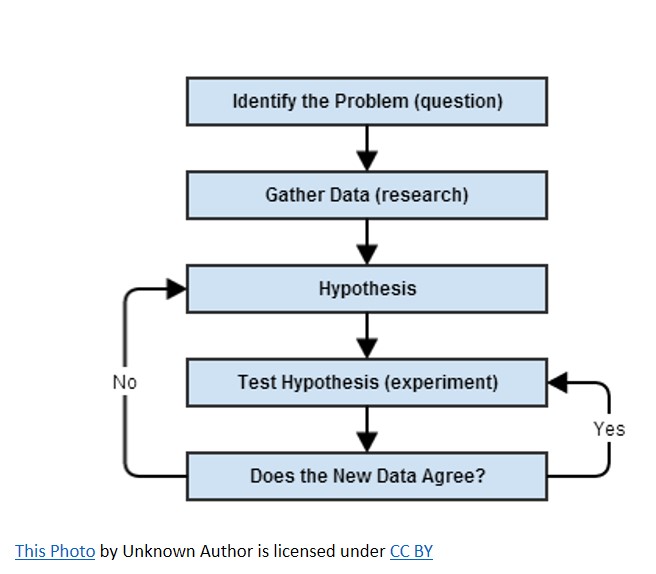
    The scientific method can be defined in as few as four steps or as many as ten, but let’s think about a five-step process.

    First, identify the problem. Use what you know so far to start your action plan. For each possible issue, determine what information you need to resolve the question. That could be gathering records, talking to occurrence and expert witnesses, and researching alternative theories.

    Second, gather data, i.e., discovery. The trick here is to be open to all information. Don’t ignore adverse information, a psychological phenomenon called confirmation bias. Your definition of the issues is likely to change as you collect more information.

    Third, develop a hypothesis. This is your theory of the case. An amount of money or other relief is owed/not owed for the reasons shown by the data the parties have gathered.

    Fourth, test your hypothesis.  Here is where the art of case resolution and science diverge. Sometimes you can test your hypothesis with a motion to dismiss or for summary judgment. Those are rarely successful. This isn’t like subjecting a cell sample to different catalysts and seeing how it reacts.

    The safest place to test your legal hypothesis is in mediation. Come prepared to experiment by seeing the result of your disclosures and negotiation. Besides interacting with your opponent in a structured, confidential process, you will get the benefit of the mediator’s guidance. Of course, unlike a scientific experiment, the best result, settlement, will probably fall somewhere between each side’s result hypothesis.

    Without a settlement, parties must test their hypothesis by submitting the case to a judge or jury—and we all know how risky that can be.

    Fifth, does the new data agree? What did you learn at the mediation? With this new information, you can revise your hypothesis and litigation strategy and test again. After a motion or trial, somebody won and somebody lost—at least theoretically. But a comparison of the net recovery or liability in comparison to the last offer and demand might show that neither side came out ahead. Depending on the posture of the case, it might not be too late to try to settle.

    Use what you learned along this inquiry path to facilitate resolution in the next case.

    How Thorough Do You Have To Be?
     

    Scientists test every theory before they publish a paper of their results. The experimentation process can be long and expensive. Thankfully, you don’t have to go through that.

    As soon as you get a file, you will start making decisions about how serious is this case. On the claimant side, the first decision is whether to accept the case, including what kind of time and money budget it will require. On the defense side, the client and counsel need to assess severity (is it a bet-the-company case/ is coverage available and adequate?) and possibly set reserves.

    Even at the earliest stages, in most cases you have enough information to begin the negotiation and dispute resolution process. No, you don’t need to look under every rock for every crumb of information.

    This claim may have started with a demand letter—a first opportunity for negotiation. Before litigation or before the parties undertake expensive discovery, consider convening a mediation.

    Discovery will uncover facts which affect the evaluation of the case. After all, that is why you do it. Otherwise you are just spinning your wheels. Use that new information to suggest meeting with the mediator to conclude the case.

    If that discovery leads parties to file potentially dispositive motions, the period while the motions are pending is another promising window for negotiation.

  • In Sickness and In Health

    The claimant was in his 30s and paralyzed from the chest down. No bowel or bladder control and no genital-to-genital sex. The settlement was seven figures.

    Throughout the years since the accident, his wife had devotedly cared for him and acted as his champion.

    Only One Person Perceived The Vibe In The Room
    The claimant’s attorney had brought me in on this settlement. One reason, I believe, was my extensive experience. I had seen cases like this before.“Have you considered protecting the settlement to make sure it goes for his care? What if his wife leaves him?” I asked.“Oh, no,” he immediately answered. “She has been a rock. That won’t happen.”I described a couple financial preservation methods the claimant could consider. All were rejected.

    You Know What Comes Next
    The next time I spoke with that claimant’s attorney he mentioned, “Do you remember John Smith? It was just as you predicted. As soon as the money was in their bank account, she left and filed for divorce. He didn’t put up much of a fight, and she got a big chunk of the settlement.”

    Part of the Job

    As mediator, I try to help people recognize issues in the case. That includes how to make available funds go further. That might be through a financial planning device or perhaps characterization of the funds in an insurance reserve. I might even raise the issue of protecting the funds from someone who had promised to be there “until death do us part.”
  • It’s Confidential, So I Can Lie, Right?

    An important underlying principle of mediation is that communications made in the course of mediation are not admissible in other civil forums. So, is it okay to make stuff up?

    There’s a Rule
    California Rule of Professional Conduct 4.1 provides, in part: In the course of representing a client a lawyer shall not knowingly make a false statement of material fact or law to a third person…

    Business & Professions Code 6068 requires an attorney “to employ, for the purpose of maintaining the causes confided to him or her those means only as are consistent with truth, and never to seek to mislead the judge or any judicial officer by an artifice or false statement of fact or law.”

    It’s the Ethics
    The difference may be subtle. Puffing is okay. Lying is not.

    Puffing refers to exaggeration, opinions, and representations about future actions. “My client will never settle for less/more than $100,000” is a type of posturing often seen in negotiation. Yet, I have often settled cases for a number both parties had previously rejected as one they would never accept.

    Descriptions of pain are subjective. Because these representations are impossible to verify, they can easily be exaggerated or baselessly dismissed. “My client’s chronic pain prevents her from ever working again” may be puffing—or it might not. If, however, the attorney knows the client is clandestinely working a job or has accepted a job offer, this statement is a false representation of a material fact in violation of the ethical rules.

    Valuations based on conflicting expert witness reports are the fodder for arguments about what is a proper settlement. Basing a negotiation stance on a hired expert’s report is appropriate. Intentionally failing to disclose pertinent information which would materially affect that expert’s opinion is an ethical breach.

    Ethical, But…
    While outlandish puffing about the value of a case may be ethical, it may not be in anyone’s interest. Ridiculous posturing and a lack of civility impair fruitful negotiation.

    Mediation results in settlement when parties make every argument based on the facts and the law while engaged in good faith negotiations.
  • Chatting with ChatGPT

    I recently attended a webinar where the speaker stated that as facts emerged in mediation, we would be able on the spot to turn to Artificial Intelligence for a case evaluation.

    Uh, no.

    Don’t get me wrong. I have test-driven ChatGPT. It is a phenomenal tool and search engine. If you are stuck for ideas, a carefully crafted query can produce excellent results. Then it’s up to you to use those results to produce your own work product.

    For example, I asked for five reasons to timely notify an insurance company of a loss. Here is an outline of the answer, omitting the full explanations:

    1. Fulfillment of policy requirements
    2. Faster claim processing
    3. Evidence preservation
    4. Compliance with legal obligations
    5. Protection against further damage

    I tested the ability of ChatGPT to evaluate a case. I provided a figure for medical expenses and lost earnings and no specific amount for pain and suffering. ChatGPT answered:
    As an AI language model, I cannot provide legal advice or determine the outcome of a personal injury case, as these depend on various factors such as the specific circumstances of the incident, the jurisdiction, and the evidence presented.

    Similarly, the answer about the value of a workers compensation claim was:
    …each case is unique, and the value of a workers’ compensation settlement can vary widely depending on the individual circumstances. To get a more accurate estimate of the value of a settlement for a particular case, it’s best to consult with a qualified workers’ compensation attorney in California.

    And those are the right answers. Lawyers and claims professionals supply the human intelligence to evaluate a case based on all the variables. AI is great at collecting available information and presenting it in a requested format. What it can’t do is analyze and evaluate.

    In my book Personal Injury Case Evaluation: What’s My Case Worth?, I explain seven specific ways to use your human intelligence to evaluate a personal injury case. AI isn’t going to do it for you. But a mediator can help you figure it out.

  • Biased? Who, me?

    At the Museum of Tolerance in Los Angeles, there are two entrance doors to the exhibits, marked Prejudiced and Unprejudiced.
     
    Try to walk through the Unprejudiced door, and you will find that you can’t. All of us are prejudiced in some way.

    Implicit Bias
    When we hear a news story about a shooter or a fraudster, the first thing many of us think is, “Was it one of ours?” “What was the race, ethnicity, age, the home town?” We want to know if this person fit into our preconceived notions about “others” or will this reflect badly on ourselves.

    The term implicit bias refers to unconscious biases we don’t even realize we hold. Many negotiators are meticulous in their language and actions to make no differentiation among clients or opponents which could reflect bias. And yet, these unconscious concepts can get in the way of settlement.

    Perception, Stereotypes, Behavior
    You may perceive people of certain groups to be less honest, smart, or cooperative than people in other groups. These perceptions are often based on stereotypes you have absorbed from family, education or other socialization, or from media. You may generalize about people in a certain group based on limited personal experience.

    Biased perception and stereotyping can alter your behavior. You may be more or less willing to accommodate, disclose information, or collaborate depending on whether others are from your own or a different group.  You may make lowball offers or outrageous demands because of a preconceived notion of how your negotiating opponent will react.

    A Neutral Setting Helps
    One way to circumvent the impediments to settlement caused by implicit bias is to use the services of professional neutral. Part of my job as mediator is to guide the parties to negotiate based on the relevant law and facts rather than bias.

    Facts can include information about a party’s past behavior. Also important is a person’s family situation and how external threats, such as an insecure employment or immigration status, could affect their bargaining position. Facts do not include assumptions based on factors such as sex or ethnicity.

    Timely settlement saves all parties time and money. One way the mediator helps parties reach settlement is to avoid the influence of implicit biases on the negotiation.

  • Get These Extras Only in Mediation

    Sometimes, parties want something they could never get in a courtroom.

    Confidentiality
    The most common provision in a settlement agreement that you can’t get in a judgment is a promise to keep the terms of the settlement confidential. Court proceedings are public; mediations are private, as are most settlement agreements.

    Note: minors’ settlements and motions for determination of good faith settlement are not confidential. Neither are workers compensation Compromise & Release documents.

    Usually, it’s the defendants who do not want public disclosure of a settlement amount because it sets a standard for future settlements and judgments. They also don’t want any publicity which reflects badly on them or could encourage additional plaintiffs to file claims.

    While the benefit to plaintiffs is less, such a clause can protect them from predatory questions about the settlement. These nosy folks are usually family and supposed friends who come around asking for money. The plaintiff can simply say they are legally prevented from discussing the terms of the settlement. Whether they agree to part with any of that settlement money then rests on the strength of their backbone.

    Plaintiffs’ attorneys may balk at a complete confidentiality agreement, because they want to publicize a good outcome. There are solutions for that objection. Almost all injury cases settle, so publicity about a specific high-dollar result most likely is about a settlement, not a judgment.

    Apology
    Most settlement agreements explicitly state that defendants admit no liability. Notwithstanding that provision, there are ways to satisfy a plaintiff’s need for emotional compensation. Often, such apologies happen orally at the mediation. Under these circumstances, the communication is protected by the cloak of confidentiality which governs the mediation.

    If the request is for a written apology, this can be handled several ways, including as a separate, confidential document or a confidential addendum to  the settlement agreement. Whether oral or written, the apologies are always carefully worded.

    Reform
    Sometimes the plaintiff wants a business to change the practices which caused the alleged wrong. Depending on the nature of the demand, a business may have already implemented the change or has plans to do so. This could be a change in safety, hiring, or compensation practices, or modifying the configuration of the business space. Perhaps a plaintiff wants a contribution to a charity.

    Some expensive changes may hinge on a plaintiff’s willingness to reduce their own recovery.

    Settlement Is Better
    Settling allows a flexibility in the terms of resolution that cannot be achieved in litigation. A willingness of any party to consider such terms can help get parties to settlement quicker.

  • How Inflation Affects Your Settlement

    Prices keep going up for just about every component of expense, including housing, groceries, and medical care. The figure at which your claim will settle is also subject to inflationary pressure. Medical expenses and wages are significant factors in settlement value calculations.
    Medical Expense
    The June 2023 issue of Business Insurance included an article about the effect of an increase in the Medicare medical service payment rate. California workers compensation medical fee schedules are largely gauged to 120% of Medicare rates. Consequently, the workers compensation community can expect an increase in medical expenses.

    Medicare’s move affects civil as well as workers compensation claims. Medicare’s adjustment presages other insurers increasing their payments to medical care providers. Providers are facing increased costs to operate their facilities. More than half of California’s hospitals are losing money. Adequate payment is important for keeping medical services available. Payment increases raise the cost of current medical expenses as well as future treatment.

    But wait, you may say, because of the collateral source rule, in most– but not all– liability cases, the amount paid by a health insurer is inadmissible. Care providers’ inflationary pressures are likely to trigger an increase in the billed rates, even though the amount they receive from insurers is much less. This affects not only special damages, but also general damages for pain and suffering which are often tied to the specials. An increase in compensatory damages could also trigger an increase in punitive damages in some cases.

    To cover the increased cost of medical care, health insurers are raising their premium rates. According to the California Department of Managed Care, premium increases ranged from a 4.1% increase in 2022 for large group coverage to 7.0% in 2023 for CalPERS (the plan for public entity workers) enrollees. Individuals buying Affordable Care Act policies in 2023 faced average premium increases of 5.6%.

    One technique for settling injury cases is to provide a vehicle for providing future health insurance rather than projected medical expenses. That workaround does not avoid inflation-fueled price increases.

    Wages
    To keep up with inflation, workers are asking for wage increases. A low unemployment rate adds urgency to employers’ responsibility to provide adequate compensation. Certainly, there are other economic factors which affect jobs in a specific industry. However, the compensation scales needed to retain necessary employees will rise.

    Injury claimants will claim damages for lost wages at a higher level. A cost of living adjustment for future lost earnings will start at this higher base amount and, depending on the prospective disability period, may justify calculating larger annual increases than in the past.

    Workers Compensation attorneys are already familiar with annual increases in disability payment rates.

    What To Do Now
    Most cases settle too late. Parties don’t feel compelled to settle until trial is imminent. Meanwhile, years pass. Well before our current inflationary spiral, I have seen the value of cases dramatically escalate while attorneys insist on turning over every rock in discovery.

    Litigation is stressful. Claimants may suffer from a lack of resources which worsens their situation. That does not benefit any party. The smart move is to thoroughly and promptly research your case and then actively pursue settlement.

    Closing a case works to all participants’ advantage. Mediation can make it happen.