Author: Teddy Snyder

  • Why Mediations Are Like Diamonds

    Anyone shopping for a diamond quickly learns diamonds have four characteristics known as the four C’s:
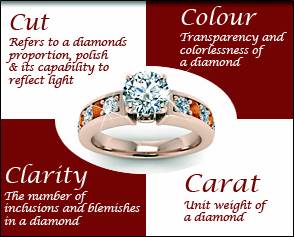
    Like a diamond, mediation is incredibly valuable and has its own 4 C’s:
    Confidentiality
    Candor
    Creativity
    Collaboration

    Confidentiality
    Confidentiality is what makes mediation work. Anything said in mediation cannot later be used in a court. If the parties do not settle, the court will never hear that the defense made a settlement offer of a certain amount or that Applicant was willing to accept certain settlement terms. Similarly, documents created solely for the mediation cannot be used in court.

    Typically, the mediator will ask all participants (not just parties) to sign a confidentiality agreement at the beginning of the mediation. But confidentiality doesn’t start or end on mediation day. Any communications prepatory to the mediation or following up the mediation are also confidential.

    Candor
    Confidentiality promotes candor. Because disclosures in mediation cannot be used against a party, parties can be more forthright in discussing the weaknesses of their case. This usually happens in caucus, when parties are with the mediator, and the other side is in another room. Parties must give permission for the mediator to convey information to the other side. Candid discussions in mediation are more likely to lead to settlement compared to the posturing that often happens in litigation.

    Creativity
    When parties get down to the real work of negotiation, discussions with the mediator can lead to new ideas about how to resolve the issues. This can include non-monetary benefits or utilizing third-party resources, such as public health benefits. Often these are options the parties had not previously considered.

    Collaboration
    Settlements result when both sides buy in to new ways of looking at the issues. Parties are at their most collaborative and creativity can really explode when parties re-convene for a brainstorming session. That’s the time to come up with a range of possible solutions and hammer out the best one.

  • WHY YOUR WORKERS COMP CLAIM EVALUATION IS WRONG

    Contradictory dynamics involving life expectancy affect your large-exposure workers compensation claim evaluations. The industrial injury plus co-morbidities may decrease the injured worker’s life expectancy. But medical advances and heredity may mean your estimate of the injured worker’s life expectancy is too low.
    The Mortality Table Isn’t the Whole Story
    Parties typically use a mortality table to compute the likely cost of future medical care over an injured worker’s lifetime. Several entities publish summaries of life expectancy data. The longer a person lives, the longer their life expectancy. A table might predict that the average 35-year old black male will not live past his 72nd birthday. But once that same man survives to his 55th birthday, the table extends that prediction to 76. The life expectancy prediction is a moving target, growing longer as the injured worker ages. Workers compensation professionals who rely solely on a mortality table to project life expectancy may be making a mistake.Why the Life Expectancy Estimate Is Too Low
    Many circumstances can affect how an individual’s life expectancy compares to the average. An important factor is heredity, but many workers compensation professionals do not ask about this issue. How old are the injured worker’s parents, or how old were they when they died? 

    Then there’s this interesting phenomenon. A study showed that for adults over 40 years old, receipt of a periodic payment such as a bi-weekly disability check increased their life expectancy. People literally lived for the check. An injured worker may be on the long end of the life expectancy bell-shaped curve.

    Add to all of this advances in medical science. People are living longer, and some mortality tables are out-of-date.

    These factors require workers compensation professionals to think twice before assuming the injured worker’s life expectancy is shorter than normal. To avoid stair-step reserving, one needs to approach the issue cautiously.

    Why the Life Expectancy Estimate Is Too High
    On the other hand, an injured worker by definition has some disability, and it might shorten life expectancy. An orthopedic injury in itself may not shorten life expectancy, but pain medication can. A holistic evaluation of lifetime medical care should consider co-morbidities as well as the industrial injury.

    One More Thing to Talk About
    In settlement negotiations parties may differ about how an injured worker’s life expectancy projection affects case evaluation. Add this to the list of issues to be discussed at mediation.

  • WHAT TO EXPECT AT MEDIATION

    Mediation remains unfamiliar to most California Workers Compensation professionals. To succeed, you– and your client– need to know what to expect. While all mediations share some similarities, each mediator has a unique style. Here’s what you can expect at one of my mediations.
    We usually start in joint session. The discussion might be limited to the logistical: introductions, bathrooms, lunch, etc.  People get to look each other in the eye.The first real step will be for the Applicant to tell how the injury happened and how things are going now. The purpose of this is to allow catharsis and to build empathy and trust between the injured worker and the mediator. Usually this is in a separate session known as a “caucus,” but if the defense needs to hear this information or wants to ask questions, it might happen while the parties are still in joint session. If the defense has heard the Applicant’s story many times, I may have Applicant do the venting in caucus.

    I usually start negotiations with the Applicant’s side. If there were prior offers and demands, I will review those to make sure we are all at the same starting point. Then comes exploring the positions which support those offers and demands. The parties’ briefs should explain the issues; the more complicated the case, the more important the briefs. Defining issues for the mediator in the brief makes for a more efficient mediation. But the briefs do not limit the number of issues; sometimes new issues emerge in mediation.

    I might speak with one or more attorneys outside the hearing of their clients, for example, to discuss a point of law.  All parties might reconvene to brainstorm solutions to an issue.  If parties are disrespectful of one another, I will stop a joint session.
    In the give and take of numbers, issues will be discussed and swapped.  Cases do not settle without compromise.  Parties should expect give and take to finalize the settlement terms.
    Participants may be surprised by the amount of time spent in caucus with the other side.  As mediator, my job is to give all parties adequate time to express their concerns.   While there are certainly exceptions, a typical workers compensation mediation lasts three to five hours.
  • YOU CAN’T SETTLE IF YOU DON’T KNOW THE ISSUES

    HOW MANY PIECES ARE THERE TO THE SETTLEMENT PUZZLE?  
    Answer:  Probably more than you think.

    The more issues there are in a negotiation, the greater the opportunity for give and take across issues. This adds flexibility for parties to shape a settlement acceptable to all. Trading across issues in negotiation is called “logrolling.”Every case has its own unique issues. Here is a partial list, some obvious, some I have seen people miss.

    INCOME ISSUES
    • Disability percentage, including whether the disability is caused by an industrial injury
    • Apportionment
    • Applicable Date of Injury
    • Past payments- when were Permanent Disability payments supposed to start? Was the right rate used? Were past payments properly characterized as PD- or should they have been TD, Temporary Disability. Is there a TD overpayment?
    • If Life Pension payments will be due, when should they start?
    • Average Weekly Wage- Have you taken into account overtime and the value of non-cash compensation?
    • Ability to perform future work
    • Return to Work issues- will the employer provide modified work?
    • What about training? Check the new California law about computer purchases.
    • Liens
    • Penalties
    MEDICAL ISSUES
    • What are the accepted body parts?
    • What expenses are reasonable and necessary? This can include issues about support services.
    • What is the appropriate medical specialty?
    • Is the treatment the Applicant wants compensable?
    • Is the Applicant’s over-all medical condition likely to shorten life expectancy?


  • 5 BEST BENEFITS OF WORKERS COMPENSATION MEDIATION

    venn settlement colors
    1) Mediation Works.  In one study, 61 percent of workers compensation mediations resulted in total resolution of the disputed issues.
    2) Mediation is fast- no waiting for a hearing date on an overcrowded court schedule.
    3) Take as much time as you need- no rush to finish within a half-day window at the WCAB.
    4) Mediation saves time and money compared to numerous, futile court appearances.
    5) Presence of the neutral can help preserve the attorney-client relationship and inject a dose of reality.
  • Settlement Ethics

    Ethics are the moral principles that govern behavior. Every workers compensation professional has ethical rules to follow. For attorneys, these are spelled out in Codes of Professional Responsibility, statutes and sometimes case law. Despite some differences among the states, the basic principles governing settlement ethics are mostly the same

    Duty to Communicate to the Client
    Lawyers must keep clients reasonably informed about significant developments (CA Rule of Professional Conduct 3-500). CA Rule 3-510 tells lawyers to promptly communicate the specifics of a written settlement offer. In other words, a California lawyer need only pass along a verbal settlement offer if the lawyer deems the offer significant. The lesson for negotiators is to make all settlement offers in writing to ensure the client learns about them. The bonus: a written offer avoids confusion about the offer’s terms.

    In an unpublished Texas case, Grillo v. Harris Hospital, a former client sued for legal malpractice damages for the alleged failure to communicate a settlement offer. The suit claimed that the attorney’s failure to convey a structured settlement offer resulted in the plaintiff’s loss of public benefits worth millions of dollars. The law firm paid a $1.6M settlement.

    Duty of Competence
    A lawyer must be competent, defined as having the diligence, learning and skill, and mental, emotional and physical ability to practice (CA Rule of Professional Conduct 3-110). That means the lawyer should be conversant with all the factors impacting settlement, including access to public benefits and tax. If the lawyer is not expert in a subject, the lawyer can notify the client to obtain such an expert.

    Duty of Honesty
    Lawyers must act honestly in litigation, including settlement negotiations. California Business and Professions Code Section 6068(d) requires an attorney to “employ, for the purpose of maintaining the causes confided to him or her those means only as are consistent with truth…“ Business & Professions Code 6128 imposes misdemeanor criminal liability on a lawyer who intends “to deceive the court or any party.” The maximum penalty is a six-month jail sentence, a fine up to $2,500 or both.

  • Why Mediation Is Like Sex

    YOU THOUGHT MEDIATION AND SEX HAD NOTHING IN COMMON?
    NOT SO!

    Both mediation and sex should:

    Happen between persons committed to the process as an essential part of the big picture

    Occur with appropriate frequency

    Stimulate participants to contribute their best selves

    Continue until mutual satisfaction

    Make participants feel better at conclusion

    Empower parties to turn to other areas of life with renewed vitality and creativity.

  • Six Biggest Mediation Misconceptions

    The Mediator might rule against me.

    Mediators do not make any rulings. The role of the mediator is to help the parties resolve the issues.

    If I go to mediation, I will have to give up something.
    Negotiation is about compromise. Each side usually gives up something. You won’t give up anything unless you, and only you, make the choice to negotiate a deal.
     
    Mediation is too expensive.
    Mediation is cheaper than litigation. It is efficient and eliminates other procedures which use up time and money.
     
    Mediation is a waste of time.
    Mediation has been shown repeatedly to be effective in resolving all issues. But even if you don’t conclude your case at the mediation, mediation typically allows parties to learn more about their opponent’s case—and their own. Issues are narrowed, setting the stage for further negotiation or more efficient litigation.
     
    There is no reason to mediate—our case is a sure winner.
    Mediation might be a place to test that hypothesis—or convince the other side. Presumably you wouldn’t be in litigation if there weren’t two sides to the story. If there is counsel on both sides, your opponent is spending time, money and effort for a reason. Applicants representing themselves might just need a forum to tell their story. Litigation is always uncertain. Settlement is the only way to retain control over the outcome, rather than let a judge impose a resolution on you.

    We look like push-overs by suggesting mediation.
    Mediation is the rule rather than the exception in most areas of law in the United States. The fact is that most cases settle at some point. Smart claims professionals and lawyers use every tool at their disposal to conclude cases as early as possible.
  • Do You Speak MSA?

    “MSA” stands for Medicare Set-Aside.  Settling a Workers Compensation claim often calls for consideration of Medicare’s interests.  MSA-speak has its own language.  The problem is that the term “MSA” is used to mean different things.  Understanding the 4 different items which may be referred to as “MSA” is critical to success in this area:

    MSA Report

    MSA Allocation

    MSA Approval

    MSA Account

    The MSA Report is prepared by an MSA allocation company.  It is an analysis of medical reports and paid medical benefits resulting in a recommendation for an MSA allocation.  The report typically provides both lump sum and annuitized funding options.   The report is not “the MSA”.  Multiple versions of a report may be prepared during evaluation and negotiation.  Nothing has been “set aside” just because there is a report.

    The MSA Allocation must be in good faith.  The parties can agree on an allocation without a report, though this is usually limited to cases brought by Medicare beneficiaries which settle for less than $25,000 and denied cases where the settlement is unrelated to medical expenses.  An allocation in a settlement document can be as simple as “The parties have taken Medicare’s interests into account and set aside $800 for future Medicare-eligible claim-related expenses.”

    Parties can choose to seek from the Centers for Medicare and Medicaid Services (“CMS”) Approval of an MSA allocation.  Seeking approval is optional.  Only the two classes of cases which meet CMS “review thresholds” can be submitted.   Class One includes all cases brought by Medicare beneficiaries settling for at least $25,000.  Class Two includes cases where the settlement is at least $250,000 and the worker is likely to be eligible for Medicare within 30 months.  If CMS approves the allocation, it cannot seek more than the approved amount later.

    Upon conclusion of the settlement, the worker will open an MSA Account.  This must be a separate account solely for MSA funds.   It is supposed to be interest bearing, though it may be difficult to find an institution that would pay interest on smaller accounts.  If any of these concepts can be called simply “the MSA”, it is the account.  Money has in fact been set aside, separate from the rest of the settlement and separate from the worker’s other assets.  Note that the correct term is “account”, not trust.  MSA Accounts can be custodial or non-custodial.

    “Do we need an MSA?” may be appropriate in referring to the entire process.  And there are plenty of times you want to use a verbal shortcut.  But vague references as to whether the subject is a report, allocation, approval or account can sometimes lead to misunderstandings.